Gunite Pool Construction | Largo Custom Concrete Pool Builders
Built-to-Last Gunite Swimming Pools for Homeowners in Largo and Florida Gulf Coast Communities
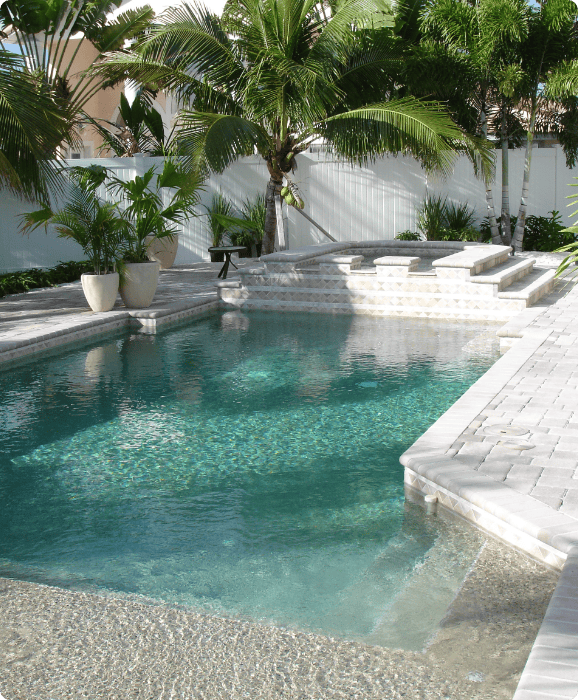
Gunite pool construction is the standard for homeowners who want full control over design, long-term structural durability, and the ability to build something that doesn’t look like every other pool on the block. Unlike pre-formed systems, gunite is applied on-site, allowing the pool to be shaped, reinforced, and finished based on the exact conditions of the property.
Curtis Pools builds gunite pools for homeowners throughout Largo and across Florida Gulf Coast communities with a focus on structural integrity, precision application, and long-term performance. Every gunite project is approached as a permanent structural system—engineered to handle soil pressure, water load, and environmental exposure over time.
Why Gunite Is Used for High-End Custom Pools
Gunite isn’t chosen because it’s common—it’s chosen because it allows complete control.
Homeowners typically move toward gunite when they want:
- A pool that fits their property exactly (not a pre-set mold)
- Integrated features designed from the start—not added later
- Structural strength that holds up over decades
- Flexibility for future remodeling or upgrades
Other pool types prioritize speed or simplicity. Gunite prioritizes customization and long-term performance.
How Gunite Construction Actually Works
Gunite is not poured like standard concrete—it is pneumatically applied at high velocity over a reinforced steel framework. This creates a dense, tightly bonded shell once cured.
This method allows for:
- Higher structural density compared to poured concrete
- Strong adhesion between layers
- Precise shaping during application
- Adaptability to irregular or complex layouts
Because it’s built in place, the structure can be engineered specifically for the site instead of relying on pre-manufactured limitations.
Structural Reinforcement and Shell Strength
The strength of a gunite pool comes from the combination of steel reinforcement and proper application—not just the material itself.
Key structural elements include:
- Rebar spacing and configuration
- Shell thickness consistency
- Proper compaction during application
- Controlled curing conditions
If any of these are off, the integrity of the entire structure is compromised. When done correctly, the shell becomes one of the most durable residential pool structures available.
The Role of Proper Curing (Most Overlooked Step)
Curing is one of the most important—and most overlooked—parts of gunite construction.
During curing:
- The material gains strength over time
- Moisture must be controlled to prevent cracking
- Temperature exposure must be managed
Improper curing leads to:
- Surface cracking
- Structural weakness
- Reduced lifespan
This is one of the biggest differences between a pool that lasts decades and one that develops problems early.
Design Freedom Without Structural Compromise
Gunite allows for design flexibility without sacrificing strength.
This includes:
- Freeform or geometric layouts
- Custom depth transitions
- Integrated spas and spillways
- Tanning ledges and seating areas
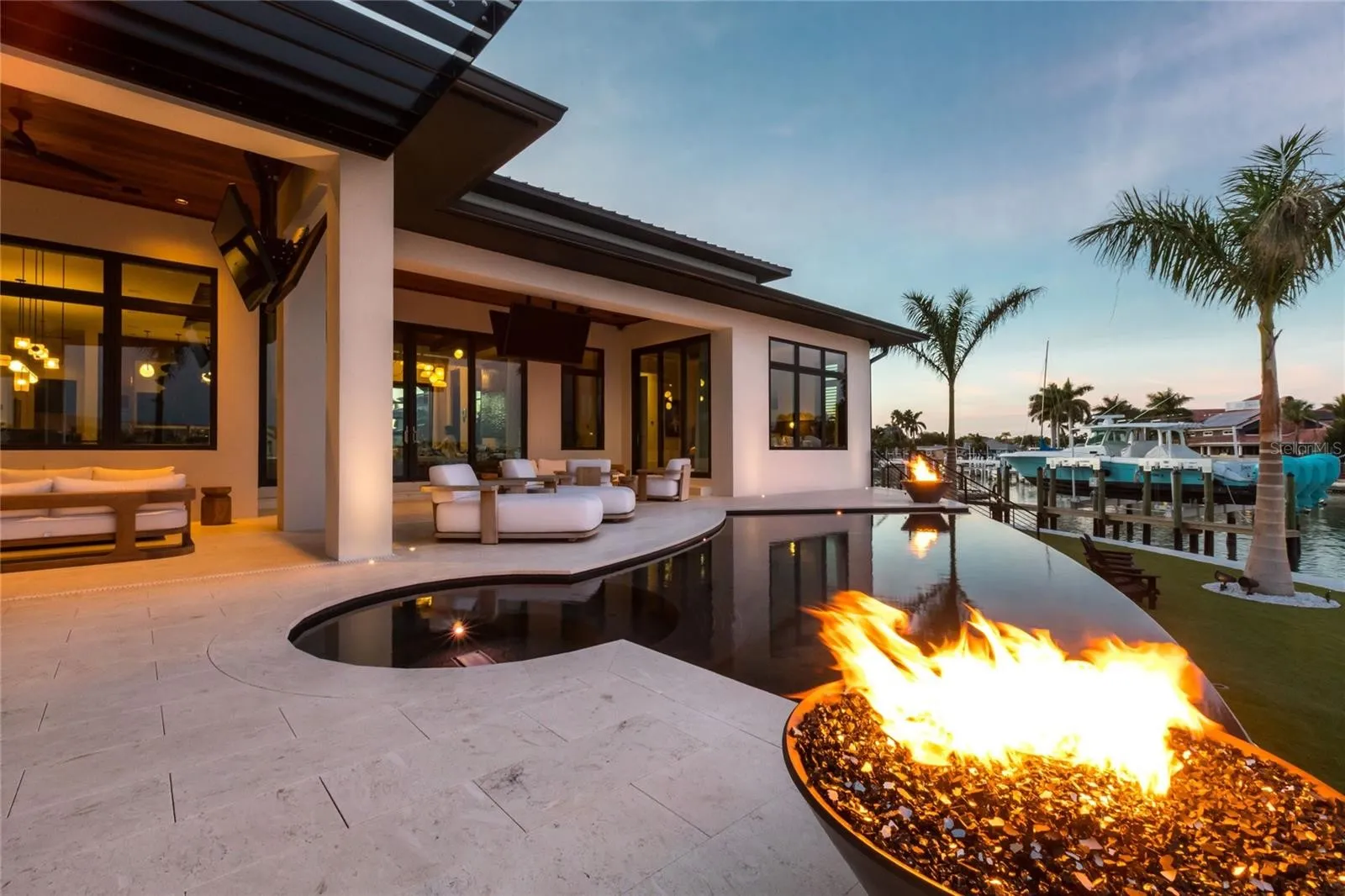
- Infinity edges and vanishing walls
Because the structure is formed during construction, features are not “added”—they are built into the system.
Surface Finishes and Long-Term Wear
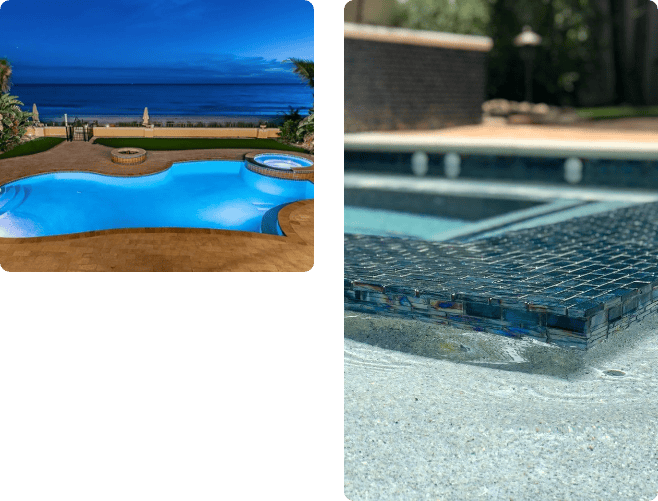
Gunite pools require an interior finish, and the choice affects both appearance and durability.
Common finishes include:
- Plaster (smooth, traditional)
- Pebble (textured, highly durable)
- Quartz blends (balanced durability and aesthetics)
Each option impacts:
- Resistance to staining
- Comfort underfoot
- Maintenance frequency
- Lifespan of the surface
The finish is the layer you interact with—but it also protects the structure underneath.
Gunite vs Fiberglass vs Vinyl (What Actually Matters)
The real difference between pool types isn’t just cost—it’s long-term flexibility and performance.
Gunite:
- Fully customizable
- Structurally robust
- Ideal for long-term ownership
Fiberglass:
- Faster installation
- Limited shapes
- Lower surface maintenance
Vinyl:
- Lower upfront cost
- Requires liner replacement
- Less structural rigidity
Gunite is typically chosen when the goal is to build once—and build it right.
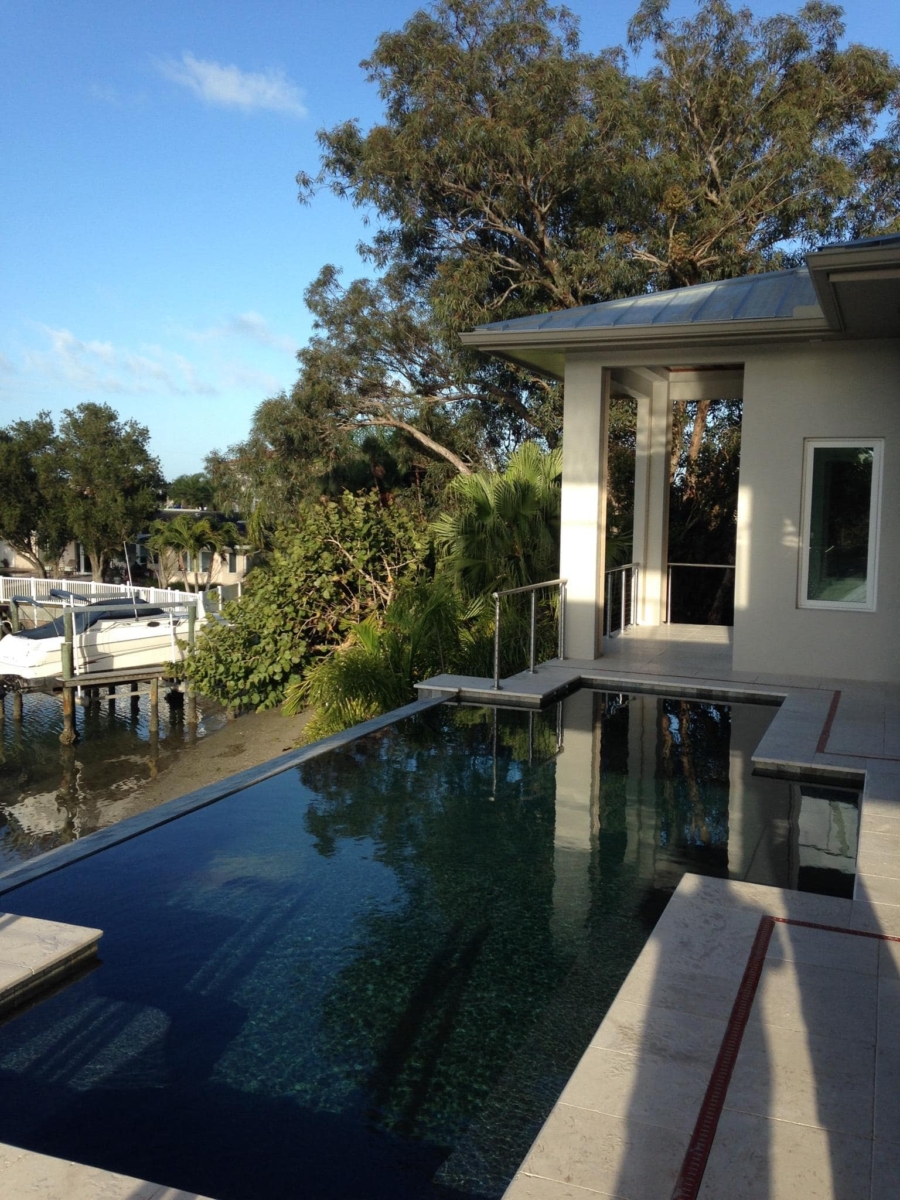
Building Gunite Pools for Coastal Florida Conditions
Gunite performs well in Florida environments when installed correctly, but the installation approach must account for local conditions.
This includes:
- Soil movement and compaction variability
- High moisture and groundwater presence
- UV exposure and heat cycling
- Year-round usage patterns
Proper installation methods ensure the pool maintains structural integrity despite these variables.
Timeline Expectations for Gunite Projects
Gunite pools take longer to build than other types—but for good reason.
Timeline factors include:
- Excavation and structural prep
- Steel reinforcement installation
- Gunite application
- Curing time
- Finishing and system integration
While timelines vary, the additional time allows for precision and customization that faster methods cannot match.
Why Curtis Pools
70+ Years of Experience
Extensive experience building gunite pools that hold up in Florida conditions.
Complimentary Design & Planning
Free design consultation to plan your custom pool layout.
Exclusive Free Start-Up Package
Includes one month of service and Pool Patrol safety features.
Locally Trusted Across the Region
Serving Largo and surrounding Gulf Coast, FL communities.
Residential & Commercial Specialists
Higher standards applied across all projects.
Waterfront & Structural Specialists
Capable of handling complex builds.
In-House Team, No Shortcuts
Full control over construction quality.
Industry Innovation Leaders
Modern systems built for long-term performance.
Areas We Serve
Curtis Pools provides gunite pool construction in:
Frequently Asked Questions – Gunite Pool Construction
Why are gunite pools considered more durable than other types?
Because they are reinforced with steel and applied in place, creating a dense structural shell that resists pressure and movement.
Does gunite crack over time?
It can if poorly installed, but proper reinforcement and curing significantly reduce that risk.
How long does the gunite phase take?
Application is relatively quick, but curing requires time to ensure structural strength.
Can gunite pools be reshaped later?
Yes, they are one of the easiest pool types to modify during remodels.
What is the biggest risk during gunite construction?
Improper curing or inconsistent application, which can weaken the structure.
Are gunite pools worth the higher cost?
For homeowners prioritizing customization and longevity, they typically provide better long-term value.
What maintenance is required for gunite pools?
Surface finishes require periodic upkeep, but the underlying structure remains stable.
Can I add features during construction?
Yes, and it is the most efficient time to integrate them into the design.