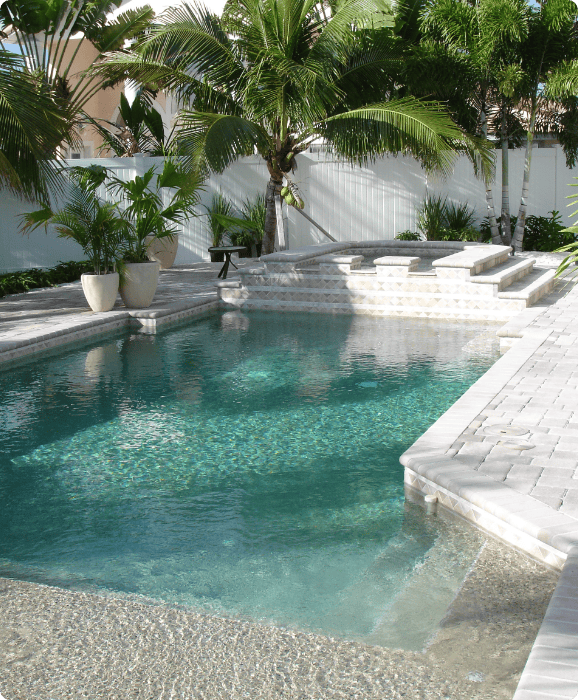

Spa Spillways Largo FL | Pool & Spa Spillover Design and Installation
Add Continuous Water Movement and a Defined Focal Point Between Your Pool and Spa
A spa by itself adds function. A spillway connects it to the rest of the pool—visually and mechanically.
Spa spillways create a controlled flow of water from the spa into the pool, adding sound, movement, and elevation. When designed correctly, they become one of the most noticeable and defining features in the entire space.
But beyond aesthetics, spillways also play a role in circulation, water mixing, and system integration. The design has to balance visual effect with hydraulic performance—otherwise you end up with inconsistent flow, excess noise, or inefficient operation.
Curtis Pools designs and installs spa spillways for homeowners in Largo and surrounding areas, helping integrate spa and pool systems into a cohesive, high-performing layout.
If you’re planning a new build or upgrading an existing pool, you can explore spa spillway design options and see how this feature can transform your setup.
What a Spa Spillway Actually Does
At a basic level, a spillway allows water to overflow from the spa into the pool.
But functionally, it does more than that:
- Maintains circulation between spa and pool
- Helps distribute heat and chemicals
- Creates continuous water movement
- Adds ambient sound
- Establishes a visual focal point
When properly designed, it enhances both performance and experience.
Types of Spa Spillways
Not all spillways are the same. The design affects both appearance and flow.
Sheer Descent Spillways
- Thin, smooth sheet of water
- Clean, modern appearance
- Requires precise leveling for even flow
Natural or Rock Spillways
- Irregular flow patterns
- More organic, natural look
- Often used in lagoon-style pools
Multi-Tier Spillways
- Water cascades across multiple levels
- Adds dimension and visual depth
- Requires careful flow management
Each style changes the feel of the pool environment.
Flow Rate and Water Control
The quality of a spillway comes down to flow control.
Too little flow:
- Breaks the visual effect
- Creates uneven spill patterns
Too much flow:
- Creates excessive noise
- Causes splash and water loss
- Increases system strain
Proper design ensures:
- Even distribution across the edge
- Consistent visual appearance
- Balanced hydraulic performance
Structural and Design Considerations
Spillways must be built with precision.
Key factors include:
- Edge leveling for uniform flow
- Proper elevation between spa and pool
- Reinforced structural support
- Integration with tile and coping
If these elements are off, the spillway may:
- Flow unevenly
- Look inconsistent
- Require constant adjustment
Integration with Pool Systems
Spillways don’t operate independently—they are part of the overall system.
They must be coordinated with:
- pool heaters for temperature consistency
- smart pool automation for flow control
- LED pool lighting for nighttime effects
- swimming pool water feature construction for combined designs
Without proper integration, performance suffers.
Lighting and Visual Enhancement
Lighting dramatically changes how a spillway looks at night.
LED lighting can:
- Highlight the water flow
- Add color effects
- Create contrast between spa and pool
When combined with the spillway, lighting turns movement into a focal feature.
Common Spillway Problems
Poorly designed or aging spillways often develop issues.
Common problems include:
- Uneven water flow
- Dripping instead of smooth spill
- Excessive splashing
- Mineral buildup affecting appearance
- Structural wear or cracking
These issues may require repair or adjustment to restore proper performance.
Maintenance Requirements
Spillways require ongoing care to maintain performance.
Maintenance may include:
- Cleaning mineral deposits
- Checking flow consistency
- Inspecting structural integrity
- Ensuring proper water levels
If buildup or flow issues persist, it may require
swimming pool water feature maintenance or repair.
When to Add or Upgrade a Spillway
Spillways are ideal when:
- Building a new pool with spa integration
- Remodeling an existing pool
- Upgrading visual design
Improving circulation between spa and pool
They are one of the most effective ways to connect multiple elements into a single cohesive system.
What a Proper Spillway Should Deliver
A well-built spillway should:
- Produce smooth, even water flow
- Maintain consistent appearance
- Integrate cleanly with the pool design
- Operate without excessive noise or splash
- Require minimal adjustment
If any of these are off, the system likely needs refinement.
Why Curtis Pools
70+ Years of Experience
We’ve designed integrated pool and spa systems across a wide range of properties.
Complimentary Design & Planning
We ensure spillways are designed to match both structure and performance needs.
Exclusive Free Start-Up Package
Includes one month of service and Pool Patrol safety features.
Locally Trusted Across the Region
Serving homeowners throughout Largo and nearby areas.
Waterfront & Structural Specialists
We handle elevation, flow, and structural challenges with precision.
Unmatched Craftsmanship & Customization
Every spillway is tailored to the pool—not built from a template.
In-House Team, No Shortcuts
Design and installation are handled with full accountability.

Areas We Serve
Curtis Pools provides spa spillway installation and upgrades in:
Frequently Asked Questions – Spa Spillways
Do spa spillways affect pool circulation?
Yes. Spillways help move water between the spa and pool, improving circulation and mixing.
Why is my spillway not flowing evenly?
This is usually caused by improper leveling, flow imbalance, or buildup along the edge.
Can I add a spillway to an existing pool?
In many cases, yes—especially during remodeling—but it depends on structure and elevation.
Are spillways noisy?
They can be, depending on flow rate and design. Proper setup balances sound and performance.
Do spillways increase maintenance?
They require some maintenance, especially to prevent buildup and maintain smooth flow.
What causes mineral buildup on spillways?
Hard water and evaporation can leave deposits that affect both appearance and flow.
Can lighting be added to spillways?
Yes, and it significantly enhances the visual effect at night.
What’s the most important factor in spillway design?
Precision. Leveling, flow control, and integration must all be exact for proper performance.